Empty classrooms, full schedules: teacher shortages hit schools
CJ Lytton, Contributing Writer
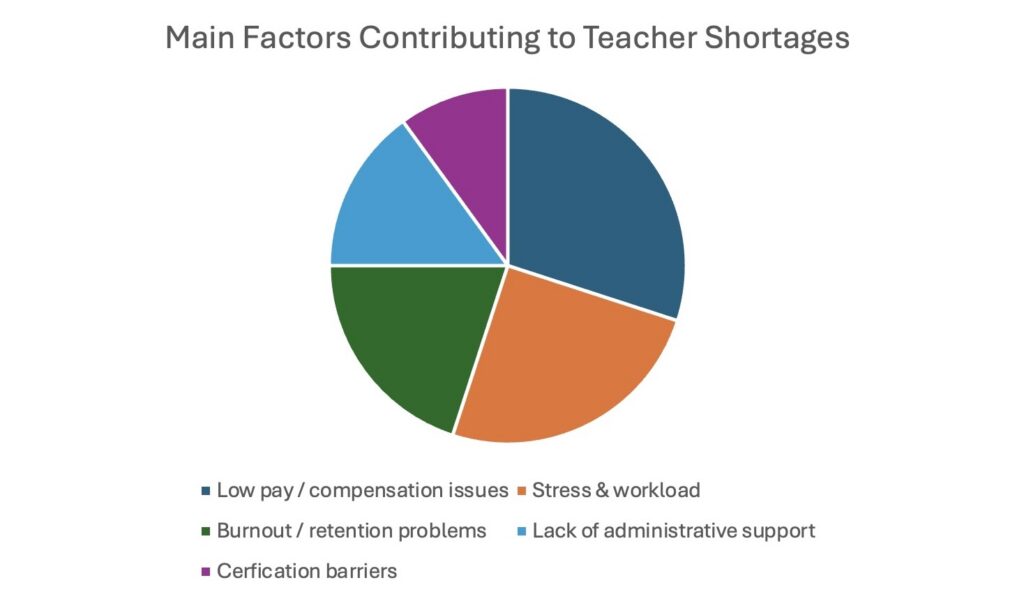
Feature graphic by CJ Lytton
The smell of dry-erase markers in the air, the sound of students settling into their seats, the routine of a lesson beginning; these are all what a South Carolina classroom should look like. However, that sense of routine has become increasingly fragile in schools. Schools across the state continue to face teacher shortages that disorder the instruction and redevelop what a “normal” classroom looks like.
From college education programs to K-12 classrooms, the effects of teacher shortages continue to shape how schools operate throughout South Carolina. While state reports show slight improvement in some places in recent years, educators say the impact is still visible in day-to-day classrooms.
The South Carolina Department of Education (SCDE) reported 706 openings for teachers statewide at the start of the 2025–26 school year. Although the number has decreased in the year before, finding teachers for school districts continues to be a challenge. Officials have also said that while overall positions have declined, shortages remain in certain subject areas, like in math, science and special education.
Education leaders say those shortages do not always appear as empty classrooms. Yet, they often show up as larger class sizes, or they solely rely on substitute teachers.
Melissa Cruver, department chair of early childhood and elementary education at North Greenville University, works closely with students who are preparing to become new teachers. She said the burdens placed on teachers today are greater than in previous years and have impacted current staffing.
Cruver explained that modern educators are responsible not only for delivering lessons, but also for planning lessons and assessing student performance. She believes that these expectations can make the profession more difficult to continue long-term.
Cruver also said that she thinks the shortage is rooted in the demanding nature of the profession and the sacrifices it requires.
“Teaching is such a highly demanding profession,” Cruver said. “It asks teachers to truly give up a lot of their time, effort and money.”
She added that while some careers are chosen primarily for financial stability, teaching is often different.
“It’s a profession that is not something you simply choose, but something you enjoy,” she said. “We don’t teach because of the money. We teach because we want to transform lives.”
Cruver said one of the most important ways to address the shortage is by improving support systems within schools, especially for new and developing teachers.
“I think the support that beginning teachers most need is a role model to follow,” she said. “Learning what methods have worked in the past, what methods don’t work and learning to navigate various situations as they come up.”
The SCDE says that the lack of support and increasing job demands have contributed to teacher shortages. This continues to place pressure on school districts that already struggle to fill positions.
In many schools, staffing shortages can lead to increased class sizes and fewer opportunities for individualized instruction. Educators say this can affect both student learning and the teacher workload, while remaining staff members take on additional responsibilities to fill in gaps.
Colleges and universities that are training future educators are seeing how these challenges influence students entering the profession.
Kyleigh Gibbons, a senior at NGU who is studying education, showed that her decision to become a teacher was driven by a desire to prepare future generations for success outside of the classroom.
“I want to best prepare the future generations for success both in the classroom and beyond,” she said. “I want to help them best understand the world around them and foster their desire for creativity and exploration.”
She said her goal as a future educator is to teach students critical thinking skills rather than simply focusing on studying.
“My goal as a teacher is not to teach them what to think, but how to think,” she said.
Gibbons said that she believes the teacher shortage is tied directly to the demands of the profession. Like long hours, emotional investment and limited payments.
“Teaching is such a highly demanding profession,” she said. “It asks teachers to truly give up a lot of their time, effort, and money.”
She added that passion for students and learning often drives individuals to enter education despite those challenges.
Through her student teaching experience, she said she has gained a deeper understanding of both classroom management and instructional planning. She also said the experience has shaped how she views students as individuals rather than just learners in a classroom.
“Student teaching has taught me how to how to truly see the students in the lives that they represent and their families” she said.
Working directly in classrooms has helped her recognize that students bring their own experiences and challenges into the learning environment.
“It has taught me how to truly see the students as the lives that they represent and their families,” she said.
When asked what support beginning teachers need most, she emphasized the importance of mentorship and guidance from experienced educators.
“I think the support that beginning teachers most need is a role model to follow,” she said.
She explained that new teachers benefit from having mentors who can share effective strategies, offer guidance in difficult situations and help them adjust to classroom expectations.
Learning from veteran teachers, she said, helps beginners understand what methods are effective and how to respond to challenges in real time.
Education officials say mentorship programs and teacher support systems are becoming increasingly important as districts work to improve maintenance and reduce turnover among new educators.
Despite ongoing challenges, many educators and future teachers say they remain committed to the profession. They point to student relationships and long-term impacts as key motivators.
As schools continue to address staffing needs, education leaders say the teacher shortage remains a complex issue shaped by workload, retention and working conditions inside schools. While progress has been made in reduction in positions, educators say that improvement will depend on both attracting any new teachers and keeping people with experience in the classroom.