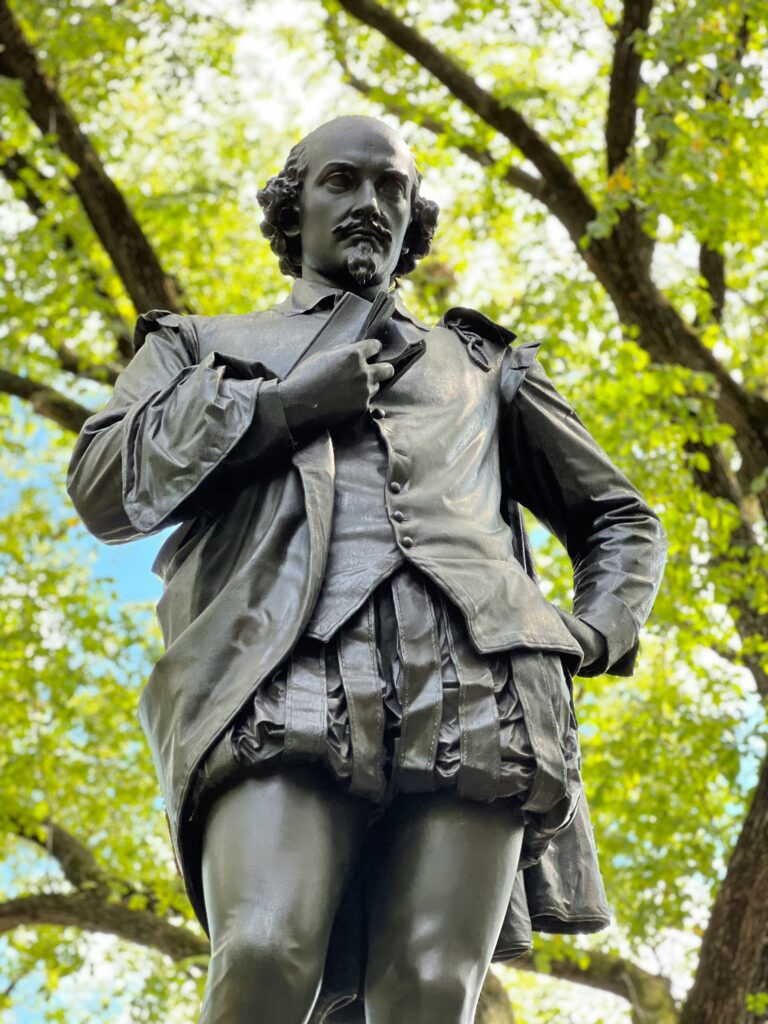
The enduring influence of William Shakespeare on literature
Evan Bradford, Staff Writer
Photo courtesy of Tim Wildsmith on Unsplash
Long after he passed, four hundred years on, William Shakespeare keeps changing the way tales unfold. Not just in old playhouses but also in schools across Buenos Aires, voices bring his phrases to life every day. You hear them woven into movies, slipped inside books, echoed through current TV series. Though born in a quiet town by the Avon River, his influence drifted wide, lodging firmly at the heart of how people imagine.
Born in 1564, Shakespeare entered the world in Stratford-upon-Avon, just as English theater started gaining ground. Not much surfaces about his youth, but records suggest he went to a nearby grammar school. There, Latin filled his days along with old writings from Greek and Roman times. Those lessons stuck, quietly guiding how he’d write later on. At age 18, he married Anne Hathaway. Three kids came into their lives shortly afterward. After that stretch, London pulled him away from home. By the 1590s, he started showing up in theaters on stage and behind plays.
Stability came through the Lord Chamberlain’s Men, a top theater company in London. When royal support arrived, they became known as the King’s Men. A reliable stage emerged from that shift, shaping much of his path. Performances kept coming at places such as the Globe Theatre. With each show, name recognition grew bit by bit.
Back then, playhouses bustled with folks from every walk of life. Stories needed to grip hard, feel alive – Shakespeare made sure they did. His plays pulled in nobles just as much as commoners. Instead of chasing trends, he mixed raw feeling with sharp tension and sudden laughs. Crowds kept coming back, drawn by how true it all sounded.
Some of his works spiral into dark themes like Hamlet, Macbeth, Othello, one choice leading to ruin. Love twists through others, A Midsummer Night’s Dream alongside Twelfth Night, where laughter hides confusion. Then come kings, real ones twisted slightly, placed on stage to feel alive again. Though rooted in fact, the past bends here, shaped by what feels true rather than what was written down. While power cracked open behind closed doors, people watched and recognized something familiar. Instead of neat labels, they got layers, each play holding a mirror up without saying so.
Shakespeare shaped more than just stories. Through his plays came sayings people now repeat without knowing their source. Phrases such as “break the ice” entered speech because he placed them first. Then there was his way with words, lines flowing five beats at a time, unstressed then stressed, again and again. That pulse lifted speeches so they felt smooth, almost alive, yet held firm shape. Because of it, language bent toward beauty while staying within reach.
Back in 1613, Shakespeare settled down in Stratford-upon-Avon. He stayed there right through till his death in 1616 at the age of 52. Following that, players who worked alongside him gathered up his scripts for what became known as the First Folio. If they hadn’t done that, then a good number of those plays could simply have vanished.
Most people now see Shakespeare as the greatest writer in English. Schools teach his stories, stages host them everywhere, while movies and TV reshape his work in new ways.
Staying true to common feelings is what makes his writing last. People still recognize love, drive, envy, the search for self – those show up again and again. Time passes, yet readers keep finding fresh meaning in his words. Out of his time, Shakespeare still shapes how we speak. Through films, whispers, even jokes – his voice slips into common talk. Stories today twist like his plots, echoing old ways of showing anger, love, and pain. Not frozen in books, his lines move and stay clear across years.