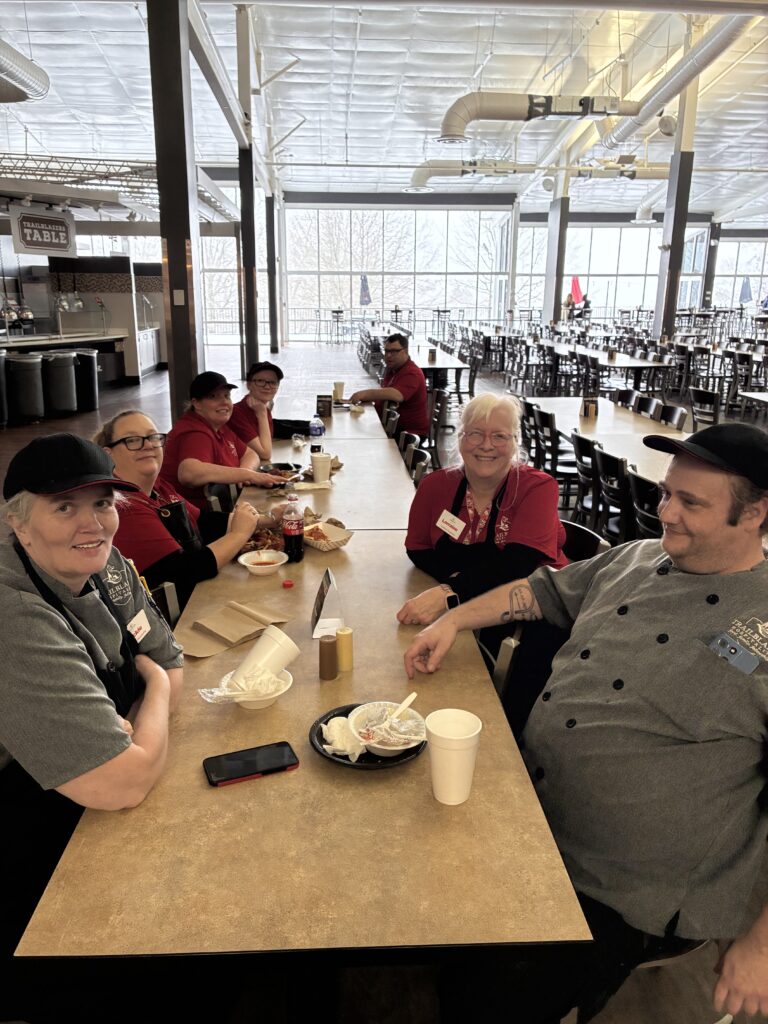
More than meals: dining hall staff steps up during winter storms
Blythe Barrineau, Sports and Visual Arts Editor
Photo courtesy of Brent Wustman
When ice and snow made travel dangerous and forced many to stay indoors, North Greenville University’s dining hall became a critical source of stability for students who remained on campus.
Behind the scenes, Aramark worked tirelessly to come up with a plan for the weekend to make sure that stage students who remained on campus were supported and had access to meals despite power outage concerns, staffing uncertainty, and delivery delays.
The first priority was creating a plan that could withstand any curve-balls thrown. That meant securing enough food, arranging staffing, and preparing for possible power outages. Unlike typical operations, where menus are posted weeks in advance, storm response required constant flexibility.
“It was literally meal to meal,” said Brent Wustman, general manager. “We didn’t know who we would have for staff so every meal depended on who we had.”
There were around 200 students left on campus during the first ice storm and 530 during the snow storm. This required a significant shift in preparation between the two weekends while still navigating staffing and supply issues.
Staffing played a major role in what could be served. If more employees were able to make it in safely, more menu items could be offered and Chick-fil-A and The 1892 Place could be opened.
Preparation began before the storm hit. Wustman placed a large, special order bringing in additional food before the ice storm. He ordered additional food and extra pre-packaged items in case Todd Gathering Place lost power and they were unable to cook.
These foods acted as an extra backup plan, ensuring students could still be fed if power was lost or staffing was dropped to just a few workers.
The storms also required personal sacrifices from staff. Some stayed overnight, on campus, sleeping in unused residence halls or in their offices. Others drove in early in the morning and left late, despite the icy and snowy roads.
”The willingness to stay on campus or drive in through the weather was amazing,” Wustman said “It’s a huge testament to the team.”
Experience from the first storm helped guide response to the snow storm, but the larger number of students during the snowstorm made planning more complex.
Challenges have continued even past the initial impact of the storms. Delivery orders have yet to make it at the scheduled time, forcing staff to adjust menus based on available supplies.
Despite obstacles, staff maintained a focus on serving students and keeping operations steady.